Research Use Only | Third-Party Tested | Secure Checkout | Fast Shipping
BPC-157 Peptide: Research Overview, Structure, and Scientific Mechanisms
BPC-157 is a synthetic peptide studied in scientific research for its interactions with cellular signaling pathways, tissue repair mechanisms, and molecular biology processes. Learn about its structure and research interest.
PEPTIDE RESEARCH GUIDES
3/5/20263 min read

BPC-157 Peptide: Research Overview, Mechanisms, and Scientific Interest
BPC-157 is a synthetic peptide that has attracted considerable interest in scientific research due to its potential role in cellular signaling and tissue repair mechanisms. Derived from a naturally occurring protein found in gastric juice, this peptide is composed of a short chain of amino acids that researchers study for its interactions with biological pathways related to healing, inflammation, and cellular regeneration.
Because peptides play an important role in biological signaling systems, BPC-157 has become a subject of investigation in fields such as molecular biology, regenerative science, and biochemical research.
What Is BPC-157?
BPC-157 stands for Body Protection Compound-157. It is a synthetic peptide consisting of 15 amino acids and is derived from a protective protein found in the human gastric system.
The peptide sequence is designed to replicate a fragment of the naturally occurring protein that researchers believe may play a role in maintaining cellular stability within biological systems.
In research environments, BPC-157 is studied for its ability to interact with signaling pathways that influence:
cellular repair mechanisms
inflammatory signaling pathways
vascular growth processes
tissue regeneration responses
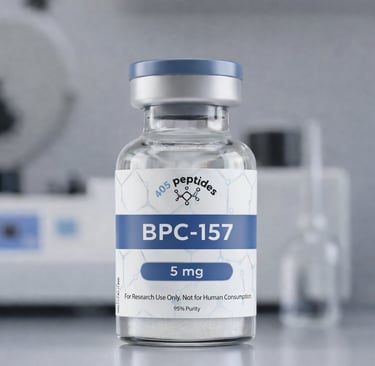
BPC-157 5mg is available for laboratory research through 405 Peptides.
Although interest in this peptide has grown significantly in recent years, research into its mechanisms and potential biological interactions continues to evolve.
The Structure of BPC-157
Like all peptides, BPC-157 is composed of amino acids linked together by peptide bonds. The specific sequence of these amino acids determines how the molecule interacts with biological receptors and signaling systems.
BPC-157 is considered a stable peptide, meaning it can remain structurally intact under certain conditions in laboratory environments. This stability has made it particularly interesting to researchers studying molecular interactions and signaling pathways.
Because peptides often influence cellular communication systems, their structure plays an important role in determining how they interact with biological receptors.
Biological Pathways Studied in BPC-157 Research
Researchers have investigated BPC-157 for its interaction with several biological signaling systems. Much of the scientific interest surrounding this peptide involves its potential influence on cellular repair mechanisms and communication pathways.
Some areas explored in laboratory research include:
Angiogenesis Signaling
Angiogenesis refers to the formation of new blood vessels. Certain research studies have examined whether peptides like BPC-157 interact with pathways that regulate vascular growth.
Cellular Repair Pathways
Researchers have explored whether this peptide interacts with signaling pathways involved in cellular regeneration and tissue repair processes.
Nitric Oxide Signaling
Some experimental models have examined interactions between BPC-157 and nitric oxide pathways, which are involved in vascular signaling and cellular communication.
Inflammatory Signaling
Another area of interest is how peptides influence signaling pathways associated with inflammatory responses.
It is important to note that much of this research is conducted in laboratory or experimental models to better understand underlying biological mechanisms.
Why Scientists Study BPC-157
The interest in BPC-157 largely stems from the broader scientific effort to understand how peptides influence biological signaling networks.
Peptides often act as messenger molecules, meaning they transmit information between cells and regulate biological activity. Studying peptides like BPC-157 helps researchers better understand:
cellular communication systems
molecular repair mechanisms
biochemical signaling pathways
interactions between proteins and receptors
Because peptides can influence these biological pathways, they remain a significant area of investigation in modern scientific research.
Synthetic Peptides in Modern Research
BPC-157 is an example of a synthetic peptide, meaning it is produced in laboratory environments using peptide synthesis techniques.
Modern peptide synthesis methods allow scientists to construct specific amino acid sequences with high precision. This allows researchers to study the behavior of individual peptides and their interactions with biological systems.
Synthetic peptides are widely used in research for:
molecular biology experiments
receptor binding studies
biochemical pathway investigations
biotechnology development
These research tools help scientists better understand how biological systems function at the molecular level.
Ongoing Scientific Interest
Scientific interest in peptides has grown substantially over the past several decades. Advances in molecular biology, biotechnology, and peptide synthesis have made it possible to study these molecules with increasing precision.
Researchers continue to investigate BPC-157 and other peptides to better understand how they interact with cellular signaling pathways and biological regulatory systems.
As research progresses, peptides remain an important subject of investigation in fields ranging from regenerative science to biochemical signaling studies.
Frequently Asked Questions
What is BPC-157?
BPC-157 is a synthetic peptide derived from a protective protein found in gastric juice. It is composed of 15 amino acids and is studied in scientific research for its interactions with biological signaling pathways.
Why is BPC-157 studied in research?
Researchers study BPC-157 to better understand how peptides influence cellular communication, signaling pathways, and biological repair mechanisms.
What type of molecule is BPC-157?
BPC-157 is classified as a peptide, which means it is a short chain of amino acids linked together by peptide bonds.
How are synthetic peptides produced?
Synthetic peptides are typically produced through laboratory techniques such as solid-phase peptide synthesis, which allows scientists to construct precise amino acid sequences.
Research Disclaimer
All compounds available through 405peptides are intended strictly for laboratory and research purposes only. These materials are not intended for human or veterinary use.

Contact
Get in touch
© 2025 Copyright. 405research. All rights reserved.