Research Use Only | Third-Party Tested | Secure Checkout | Fast Shipping
TB-500 Peptide: Research Overview, Structure, and Biological Signaling Mechanisms
TB-500 is a synthetic peptide derived from thymosin beta-4 and studied in scientific research for its role in cellular signaling, actin regulation, and tissue organization pathways.
PEPTIDE RESEARCH GUIDES
3/5/20264 min read
TB-500 Peptide: Research Overview, Structure, and Biological Signaling Mechanisms
TB-500 is a synthetic peptide studied in scientific research for its interactions with biological signaling pathways related to cellular communication, tissue repair mechanisms, and molecular regulation. This peptide is derived from a naturally occurring protein called thymosin beta-4, which plays an important role in cellular migration and structural organization within biological systems.
Because peptides act as signaling molecules that influence how cells communicate, researchers study TB-500 to better understand how certain molecular pathways regulate tissue maintenance, cellular regeneration, and biological repair mechanisms.
Interest in TB-500 has grown significantly in recent years as researchers continue investigating how peptides influence complex biological systems.
What Is TB-500?
TB-500 is a synthetic version of a peptide fragment related to thymosin beta-4, a naturally occurring protein found in many types of cells throughout the body. Thymosin beta-4 plays a role in cellular organization, particularly in processes related to cell movement and structural protein regulation.
TB-500 was developed to replicate specific segments of this naturally occurring protein so that researchers could study its biological signaling properties more precisely.
In research environments, TB-500 is studied for its interaction with cellular processes involved in:
cellular migration
structural protein regulation
tissue repair mechanisms
inflammatory signaling pathways
vascular signaling processes
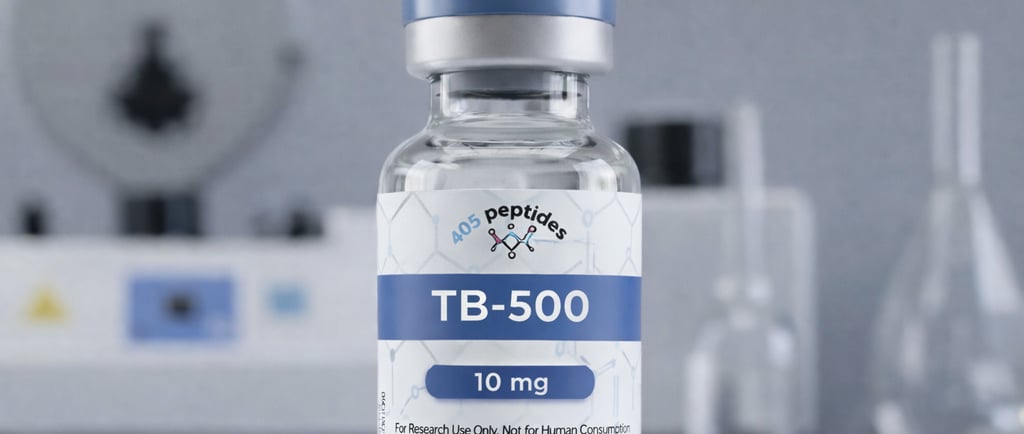
TB-500 10 mg is available for laboratory research through 405 Peptides.
By examining these pathways, scientists aim to better understand how molecular signals coordinate complex biological activities.
Structure and Amino Acid Composition of TB-500
Like other peptides, TB-500 is composed of a chain of amino acids connected by peptide bonds. The specific sequence of these amino acids determines how the molecule interacts with receptors and cellular signaling pathways.
The original protein thymosin beta-4 contains 43 amino acids, but TB-500 represents a modified fragment designed to study specific biological functions of that larger protein.
Because peptides are smaller than full proteins, they are often easier to analyze in laboratory settings. Researchers can investigate how these molecules interact with cellular structures and influence biological signaling networks.
Peptide structure plays an important role in determining how molecules bind to receptors and activate signaling cascades within cells.
The Role of Thymosin Beta-4 in Biological Systems
To understand TB-500, it is helpful to examine the biological role of its parent molecule, thymosin beta-4.
Thymosin beta-4 is a naturally occurring protein involved in actin regulation, which is an essential process in cellular structure and movement. Actin is a structural protein that helps maintain cell shape and supports cellular migration.
Research involving thymosin beta-4 has explored its role in several biological processes, including:
cell migration pathways
tissue organization
vascular development signaling
inflammatory signaling mechanisms
TB-500 allows researchers to study certain aspects of these biological pathways using a smaller peptide fragment.
Biological Signaling Pathways Studied in TB-500 Research
Researchers investigating TB-500 have focused on several signaling pathways that are important for cellular communication and tissue organization.
Cellular Migration
Cell migration is a biological process where cells move from one location to another in response to chemical signals. This process plays a role in tissue development, immune responses, and biological repair mechanisms.
Research involving TB-500 has explored how peptide signaling may influence cellular movement and organization.
Actin Regulation
Actin is a structural protein that forms part of the cytoskeleton of cells. It plays a key role in maintaining cell shape and enabling movement.
Studies involving thymosin beta-4 have examined how this protein interacts with actin to regulate cellular structure. Because TB-500 is derived from thymosin beta-4, researchers also study its relationship to actin-regulating pathways.
Vascular Signaling Pathways
Another area of interest in TB-500 research involves biological pathways related to vascular signaling and tissue organization.
Some research models explore whether peptides related to thymosin beta-4 interact with molecular pathways involved in vascular signaling and cellular communication.
Inflammatory Signaling Mechanisms
Researchers also investigate how peptide signaling interacts with molecular pathways related to inflammatory responses.
Understanding these pathways helps scientists explore how biological systems regulate communication between immune cells and other tissues.
Why Researchers Study TB-500
TB-500 has become an important subject of study because peptides provide powerful tools for exploring cellular signaling systems.
Peptides can act as molecular messengers, meaning they transmit information between cells. By studying peptides like TB-500, scientists can better understand how these signaling systems influence biological processes.
Research involving TB-500 contributes to scientific understanding in areas such as:
cellular communication pathways
molecular signaling systems
tissue organization mechanisms
protein regulation processes
Studying these pathways helps scientists build a more complete picture of how biological systems function at the molecular level.
Synthetic Peptides in Scientific Research
TB-500 is produced through laboratory peptide synthesis techniques, which allow scientists to construct precise amino acid sequences.
One of the most widely used techniques for producing peptides is solid-phase peptide synthesis, a method that enables researchers to assemble amino acid chains step by step.
Synthetic peptides are valuable research tools because they allow scientists to:
isolate specific biological signals
study receptor interactions
analyze molecular pathways
investigate cellular signaling mechanisms
Advances in peptide synthesis technology have made it possible to design peptides with highly specific structures for research purposes.
The Growing Interest in Peptide Research
Scientific interest in peptides has expanded significantly as researchers gain a deeper understanding of how these molecules regulate biological communication.
Peptides are now studied across multiple scientific disciplines, including:
molecular biology
regenerative research
immunology
metabolic science
biotechnology development
As research continues, peptides such as TB-500 remain important subjects for scientists exploring the complex signaling systems that regulate biological processes.
Frequently Asked Questions
What is TB-500?
TB-500 is a synthetic peptide derived from a fragment of the naturally occurring protein thymosin beta-4. It is studied in research for its interactions with cellular signaling pathways.
What is thymosin beta-4?
Thymosin beta-4 is a naturally occurring protein involved in cellular organization, actin regulation, and cell migration pathways.
Why do scientists study TB-500?
Researchers study TB-500 to better understand how peptides influence cellular communication, molecular signaling pathways, and tissue organization mechanisms.
How are synthetic peptides produced?
Synthetic peptides are typically produced through laboratory methods such as solid-phase peptide synthesis, which allows researchers to build specific amino acid sequences with high precision.
Research Disclaimer
All compounds available through 405peptides are intended strictly for laboratory and research purposes only and are not intended for human or veterinary use.
Browse our research-grade peptides at 405Peptides.com.

Contact
Get in touch
© 2025 Copyright. 405research. All rights reserved.